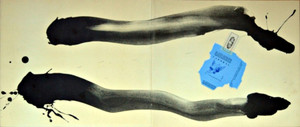
Theodoros Stamos at Andre Emmerich - limited edition signed exhibition lithograph, 1968

Theodoros Stamos

CONTACT GALLERY FOR PRICE

Current Stock:
1

Theodoros Stamos at Andre Emmerich - limited edition signed exhibition lithograph, 1968

Theodoros Stamos was once celebrated as one of the youngest members of the elite New York Abstract Expressionist group known as “The Irascibles” , which included Jackson Pollock, Willem de Kooning Barnett Newman, Jimmy Ernst, James Brooks, Robert Motherwell, Clyfford Still, Ad Reinhardt and most fatefully Mark Rothko - immortalized in the famous 1950 Life Magazine photograph shown above.
In fact, Stamos became such close friends with one member of the group – Mark Rothko –that Rothko appointed him one of three trusted executors of his estate. (The other two were Bernard Reis, an accountant, and Morton Levine, an anthropology professor.
Stamos’ role as a Rothko estate executor would ultimately be the ruin of his career and would permanently tarnish his legacy. Today, Theodoros Stamos is now widely remembered more for his involvement in the notorious Mark Rothko Estate legal scandal than for his own artwork.

THE ROTHKO SCANDAL:
In February 1970, Mark Rothko committed suicide, leaving behind a massive estate of 798 paintings.
Within just three weeks of taking over the estate, the trio of trusted executors hastily pushed through two sweeping contracts to sell and consign the entirety of Rothko’s 798 paintings to the internationally renowned Marlborough Gallery. Marlborough purchased 100 of Rothko's finest paintings for a flat sum of $1.8 million—averaging just $18,000 per painting, an absurd fraction of their fair market value – even back then. The remaining 698 paintings were consigned to Marlborough under an unprecedentedly high 50% commission rate.
Rothko's children sued the executors for defrauding the estate.
The landmark Rothko Case legal trial (Matter of Rothko, 1974–1975) – a non-jury bench trial - was a massive art-world scandal involving conspiracy, self-dealing, breach of fiduciary duty, and the multi-million dollar betrayal of a dead artist’s estate.
During the trial, it was revealed that shortly after authorizing these unfavorable deals, Theodoros Stamos signed his own lucrative, personal artist representation contract with the very same Marlborough Gallery.
In 1975, the court ultimately stripped Stamos of his executorship, canceled the Marlborough contracts, and found the executors guilty of negligence and conflicts of interest. Stamos, the other executors, and the gallery were hit with a massive $9.2 million fine. Later, the IRS slapped Stamos personally with an additional $19.4 million in self-dealing excise taxes, completely wiping out any financial gains he ever made from the gallery.
After the landmark 1975 verdict, top-tier galleries on the level of Emmerich permanently blacklisted Stamos, cementing his professional exile The commercial value of Stamos’s own art plummeted significantly following the trial. Major American museums and top-tier galleries distanced themselves from him to avoid proximity to the scandal, effectively exiling him from the mainstream New York art market.
Professionally isolated in the United States, the disgraced Stamos spent the final decades of his life split between New York and the Greek island of Lefkada. His work never recovered its pre-scandal prominence or market value.

A Compromised Legacy
When Stamos died in 1997, his obituaries and historical footprint remained inextricably bound to the betrayal of his close friend. Even after his death, his estate was mired in further legal battles over authenticity and copyrights.
The Emmerich Years (1958–1970): Stamos began his association with the renowned Andre Emmerich Gallery in 1958. Throughout the 1960s, Emmerich successfully managed his career, hosting notable solo exhibitions of his work
However, following Rothko’s suicide in 1970, Stamos officially left Emmerich to join the Marlborough Gallery. In fact, this exact transition became a smoking gun for prosecutors during the historic Rothko case legal trial. The court ultimately determined that Stamos had been enticed to switch from Andre Emmerich by the promise of a far more lucrative personal contract with Marlborough, which the court ruled was a severe “self serving breach of loyalty” as Stamos had essentially allowed Marlborough to exploit his dead friend’s estate in exchange for his own career advancement. The court noted that Marlborough granted Stamos a dealer-agent contract on terms far more advantageous and generous to him than the highly exploitative, 50% commission terms he had just approved for his late friend Mark Rothko's estate.

The Aftermath

In the aftermath of the trial, the Rothko family was made whole, and most of the paintings and proceeds from money judgments were returned to the estate and the foundation. The highest reported price for a Mark Rothko painting is now $195 million, reportedly acquired by billionaire Ken Griffin in 2024 through a Christie’s private transaction.

Frank Lloyd, a co-founder and head of the Marlborough Gallery international enterprise was later indicted by the Manhattan DA for tampering with evidence connected to the case, but he escaped to the Bahamas. Eventually, he cut a deal with prosecutors so he could return to NY to surrender to authorities – while avoiding any jail time through restitution and community service.

Despite the scandal, Marlborough Gallery continued to operate as a premier international art gallery enterprise for another half century – and ultimately shuttered in June 2024, following the death of its chairman, Pierre Levai, Frank Lloyd’s nephew, who worked at Marlborough for more than half a century. By then, the gallery had relocated to a space in the heart of Manhattan’s West Chelsea arts district. In the Summer of 2026 – only weeks ago- Marlborough’s owners sold their 9,228 square foot flagship with 18 foot ceilings and a terrace at 545 West 25th Street to Gazelli Art House – a heretofore little-known international gallery based in Azerbaijan and London.

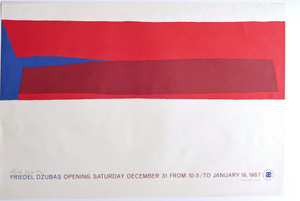
As for Andre Emmerich, for the next quarter century after Stamos defected, he continued to represent blue chip artists like Kenneth Noland, Morris Louis and David Hockney until 1996 when he sold his eponymous gallery to Sotheby’s for a handsome profit. During his storied career, two of his three sons took their family fortune to Hollywood; one became Chairman of Warner Brothers Pictures Group, while the other became a well-known film and television actor. The third Emmerich son stayed in New York to become an elite Wall Street Corporate lawyer at a white-shoe law firm.

Meanwhile, in contrast, Theodoros Stamos’ career and life was destroyed as a result of the Rothko scandal. His attempt to advance his career by leaving Emmerich to join Marlborough in the wake of Rothko’s suicide backfired catastrophically. To satisfy the massive judgments against him, Stamos even had to convey his house to the Rothko estate.

It’s a sad coda to what should have been an illustrious career because Theodoros Stamos was a very good artist. Mark Rothko obviously thought so.

The present work
And that brings us to the present work – a scarce pencil signed and numbered from the limited edition of only 100 – advertising a 1968 exhibition at the Andre Emmerich Gallery – three years before all the troubles began for Stamos.

It’s a small, memorable, and nostalgic piece of art history. It’s a real conversation piece – and whoever acquires it will have some story to tell!