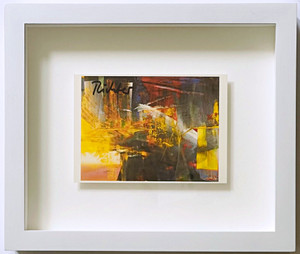
Scarce Art Card - Marisol - Women and Dog 1964 (Hand Signed and Dated), 1977
kr.0.00
Marisol Escobar
Alpha 137 Gallery and Art Advisory
In business for nearly two decades, we are a well established, popular contemporary art boutique specializing in expertly chosen prints, multiples, and unique sculptures, design objects, works on paper and paintings by recognized artists, with a focus on the secondary market. We also have an impressive selection of scarce and coveted art historical ephemera, monographs and merchandise at different price points. Discover our small business: one of the best kept secrets in the art world, and join our ever-growing family of art lovers - from first time collectors to seasoned fine art professionals. Please note that works are available for purchase exclusively online, and we are not able to accommodate requests for in person viewings at this time.
For a short order art appraisal, please click the "Art Appraisal Services" option above. To reach us, click on the
Contact Us option above or at the bottom of this page.
An educated collector is our best client


CONTACT GALLERY FOR PRICE
Marisol - Art Card: Wife of Modoc (Hand Signed by Marisol), 1980
Offset lithograph postcard (Hand signed by Marisol)
The work depicted in this image is Marisol's Wife of Modoc (often misread as Wife of Modog due to the stylized lithographic typeface)
The image belongs to a series of works Marisol created in the 1970s that explored historical and Native American figures (including other notable prints like Pocahontas and Chief Joseph). Her work in this era often blended her signature folk-art aesthetic with bold, vibrant geometric borders reminiscent of traditional textiles. The central figure depicts a Native American woman from the Modoc tribe adorned in a red robe with long yellow fringe and geometric patterns
"Wife of Modoc" (often historically referenced as "Wife of Modoc Henry") is a famous portrait of a Klamath Native American woman captured by renowned photographer Edward Sheriff Curtis.
This work has been elegantly framed with beveled edges in a museum quality wood frame under UV plexiglass.
Measurements:
Framed
12.5 inches (vertical) by 10.5 inches (horizontal) by 1 inches
Card
6 inches (vertical) by 4.5 inches (horizontal)
Marisol Biography:
Born Maria Sol Escobar in Paris to Venezuelan parents, the artist Marisol moved to Los Angeles at age fifteen and studied for a time with the painter Hans Hofmann in New York. Rebelling against the dominance of Abstract Expressionist painting in the mid-1950s, she turned to sculpture, forging a distinctive approach that combined elements of Surrealism, Pop art, assemblage, and even folk art in her arrangements of large- scale figures. Marisol frequently used her own image—drawn, painted, sculpted, photographed, and carved—for both the male and female figures of her tableaux, which have depicted everything from monstrous, oversized children to John Wayne on horseback, a dinner date, women at a cocktail party, a wedding, and The Last Supper.
Each of the four life-sized blocky female figures in the sculptural assemblage Women and Dog is a self-portrait of the artist, carved from wood and painted. One of the figures incorporates a black- and-white photograph of Marisol; the multiple faces on two of the others were cast in plaster directly from the artist herself; while the small figure is a representation of Marisol as a child. Each sports a fashionable outfit of the period, accessorized with found objects that include a real purse and hair bow. Although the work explores variations on the generic midcentury American woman, Marisol, commenting on the piece in 1964, claimed to have been “inspired by the dog.” Indeed, the stuffed dog head—which the artist purchased from a taxidermist—is a central element of the piece; the animal, tethered by a leash, becomes another kind of accessory to these well-heeled ladies.
-Courtesy Whitney Museum
Marisol Escobar